The project aims to raise awareness about one of the most critical issues facing the world today: environmental protection. Throughout this initiative, we addressed a range of topics, including environmental sustainability, pollution, climate change, recycling, and sustainable development. Our primary objective was to confront ecological challenges within our societies, emphasising the necessity for adopting more eco-friendly lifestyles and cultivating greater awareness of our daily activities that contribute to environmental degradation. Specifically targeting young people, we aimed to inspire them to become proactive advocates for positive change within their communities. To accomplish these goals, we employed multicultural physical interactions, non-formal learning methodologies, digital education, and both digital and practical outcomes.
PROJECT RATIONALE
The project focused on engaging young people aged 18 to 30 who face geographical barriers, such as residing in urban problem zones or rural and remote areas, as well as those encountering social and economic obstacles. Regardless of that the project is open to all young people from 6 countries that participate on this project: Austria, Lithuania, Serbia, Croatia, Turkey and North Macedonia.
The project addresses all of the aforementioned topics, working directly with young people throughout four different phases.
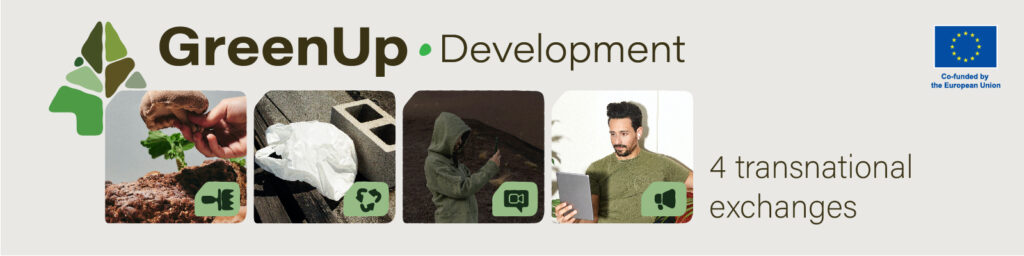
Over the course of the project’s initial phase, we conducted four transnational exchanges to raise awareness and educate young people. These exchanges covered various themes:
- Recycling, reducing, and reusing materials to create additional value, including organic agriculture.
- Sustainable Development Goals, climate actions as we as organic agriculture, with an emphasis on promoting modern permaculture practices, micro-gardens and balconies, rooftops, or community gardening.
- Basic audio-video production and digital storytelling techniques.
- Using digital marketing as a tool to promote project objectives and the outcomes of participant efforts, thereby enhancing their capacities.
Each transnational exchange hosted 18 participants, resulting in 72 youngsters educated throughout the project.
Apart from these four mobilities, we organised in Austria a national Training Course on Proposal Writing, which was mandatory for all the participants. This Training Course was put to their advantage when proposing their local activities in the next phase.
In the subsequent phase, participants from Austria formed small national groups tasked with synthesising the competencies acquired during the transnational exchanges. These groups developed their own small-scale projects or initiatives, eligible for sub-grants from the project budget. They submitted “project proposals” for subgranting, which were evaluated by the project team.
Moreover, Transnational Team Events gathered participants from various countries in an online environment and allowed them to share their ideas, aspirations, and support with each other. The idea behind these activities was to promote international cooperation and even participate in local activities in other countries.
The third phase involved implementing participant-led projects and initiatives. Participants received funding from the project budget to cover their costs. Read more about the local initiatives here.
The fourth and final phase considers summoning up the results achieved and distributing them through conventional media and social networks.