WHEEL is an Erasmus+ Sport project that explores how cycling can support the physical and mental well-being of women who have experienced gender-based violence, using sport as a tool for recovery, empowerment, and social inclusion.
The project focuses on creating safe, supportive, and respectful cycling environments, where women can move at their own pace, rebuild confidence, and reconnect with their bodies through physical activity. WHEEL places care, choice, and autonomy at the centre of all activities.
What is WHEEL about?
Across Europe, many women face barriers to participating in sport — especially when safety, trust, or confidence have been affected by past experiences. WHEEL responds to this challenge by using cycling as an accessible, adaptable, and non-competitive activity that can support both physical and mental well-being.
Rather than focusing on performance, WHEEL promotes:
- gentle and health-enhancing physical activity
- body awareness and confidence-building
- social connection and inclusion
- sport spaces that are sensitive, respectful, and supportive
The project also addresses the need for better preparation of sport professionals, ensuring that instructors and coaches are equipped to work with women in a safe and informed way.
Project Objectives
The WHEEL project aims to support women who have experienced gender-based violence by using cycling as a safe, accessible, and empowering way to improve well-being, rebuild confidence, and foster social inclusion.
Project Objectives
- 🚲 Support physical and mental well-being by offering cycling activities designed to help women regain confidence, autonomy, and a sense of control
- 🛡️ Create safe and supportive sport environments by applying trauma- and violence-informed approaches in cycling activities
- 🎓 Train cycling instructors and sport professionals to work sensitively and responsibly with women affected by violence
- 🤝 Strengthen cooperation across sectors by connecting sport organisations with gender-equality, health, and social-support actors
- 🌍 Develop and share a European cycling framework that can be reused by organisations across different contexts
Project Results
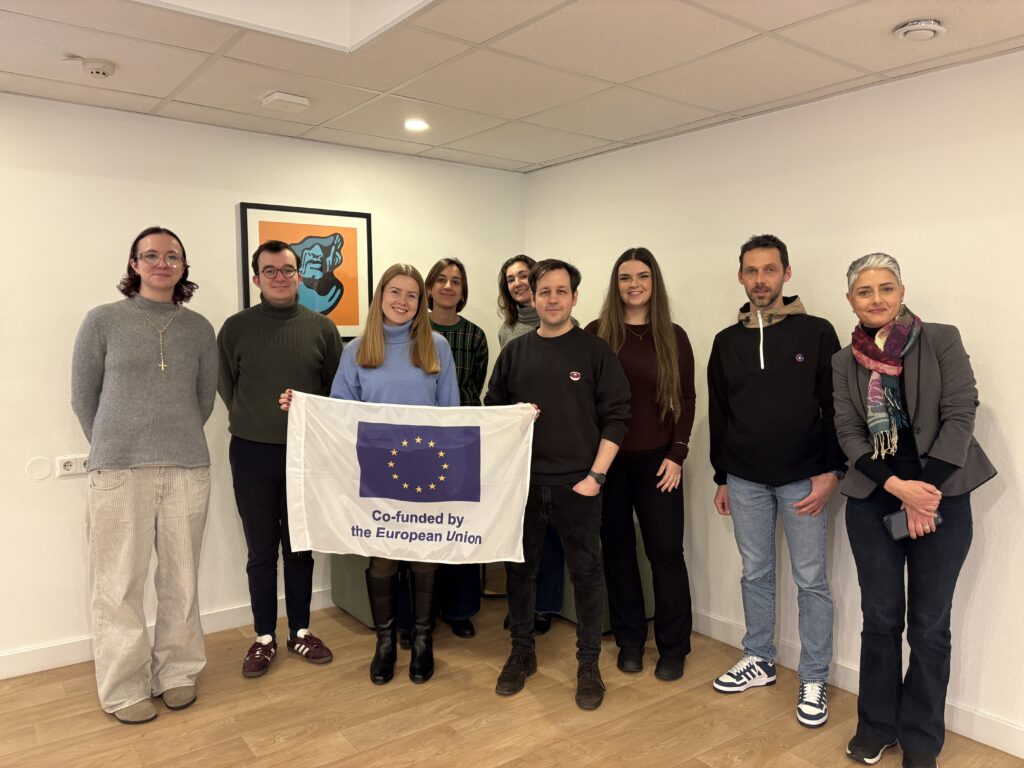
The WHEEL project started with a two-day Kick-off Meeting in Vienna on 28–29 January, where partners met in person to begin the journey together.
Over the two days, the group took time to get to know each other, align on shared values, and discuss how the project can be implemented with care and responsibility. Hosting the meeting in Vienna created a welcoming space for open conversations and laid a strong foundation for collaboration across the partnership, making all partner countries ready for the next steps.
With this first milestone behind us, the project is now moving forward. Research activities have begun, partners are preparing the next steps, including upcoming trainings and pilot cycling activities in the partner countries. We’re excited to see the project take shape and to continue working together in the months ahead.
What’s Next?
In the next phase of the WHEEL project, partners will begin research activities focusing on how cycling and physical activity can support the well-being of women who have experienced gender-based violence. This work will help better understand needs, barriers, and good practices across different national contexts, ensuring that the project is grounded in real experiences.
At the same time, partners will start developing a shared European approach to cycling workshops, bringing together insights from research, existing practices, and partner expertise. This work will lay the foundation for upcoming pilot cycling activities, which will be implemented and tested in several partner countries.
Alongside the pilot activities, the project will also prepare and deliver training activities for cycling instructors and sport professionals, supporting them to work in a safe, sensitive, and supportive way. The learning from these activities will contribute to a European framework and practical recommendations that can be used by organisations beyond the project itself.
As the project moves forward, WHEEL aims to build lasting cooperation between sport, gender-equality, and support organisations, and to highlight the positive role sport can play in empowerment, recovery, and long-term well-being.
Project Partners
The WHEEL project is implemented by a diverse European consortium, bringing together Association Alice Milliat (France) as coordinator, alongside Fifty Fifty (France), OTI Slovakia (Slovakia), Active Austria (Austria), Associação Desportiva Cultural e Social de Carvalhais (Portugal), Mediterranean Institute of Gender Studies (Cyprus), and Sport et Citoyenneté (France).
This partnership brings together expertise in sport, gender equality, health, and social inclusion, enabling the project to address women’s well-being through cycling across different cultural and national contexts.


Coordinator’s contact details
- Alice Milliat Association (AMA)
- Alexandre Charrier
- E-mail: ac@alicemilliat.com / europe@fondationalicemilliat.com
Funded by the European Union. Views and opinions expressed are however those of the author(s) only and do not necessarily reflect those of the European Union or the European Education and Culture Executive Agency (EACEA). Neither the European Union nor EACEA can be held responsible for them.