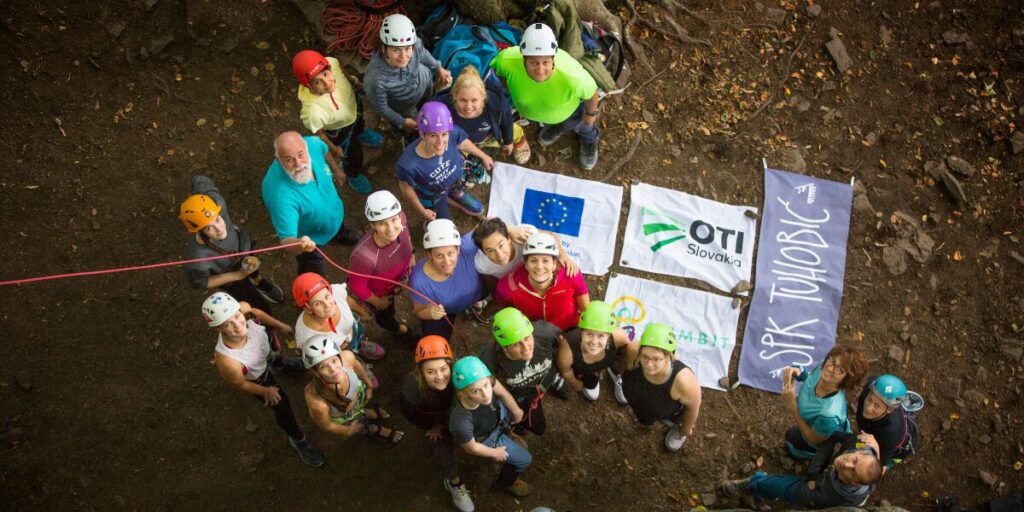
After the first CLIMBIT training in Vienna introduced participants to indoor climbing and bouldering, the next step was to move outdoors. In September 2023, women from Austria, Slovakia, and Croatia came together in Hriňová, Slovakia for the second international CLIMBIT training, this time focused on rock climbing. For many participants, it was their first real experience climbing on natural rock, which made the weekend both more demanding and even more rewarding.
Set near the outdoor climbing area Kalamárka, the training gave participants the opportunity to build on what they had already learned and take their skills further. While the programme was still beginner-friendly, it was designed for people who already had some basic climbing experience and were able to belay. This made it possible to introduce more advanced elements such as lead climbing and rappelling, always under the guidance of experienced instructors.
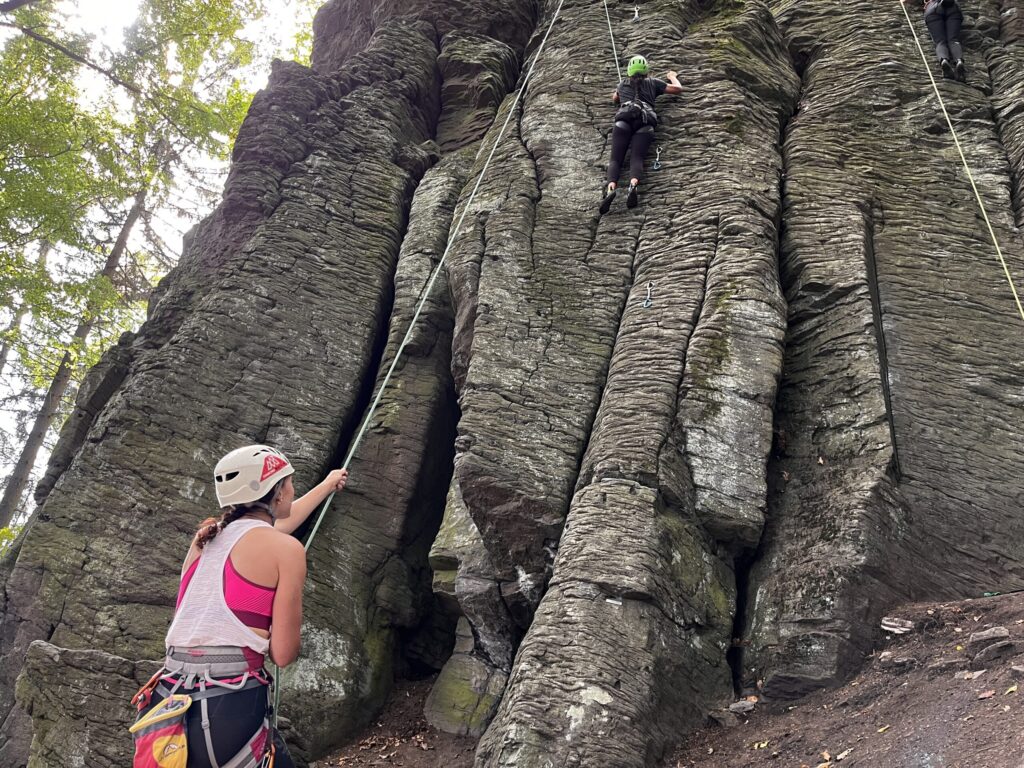
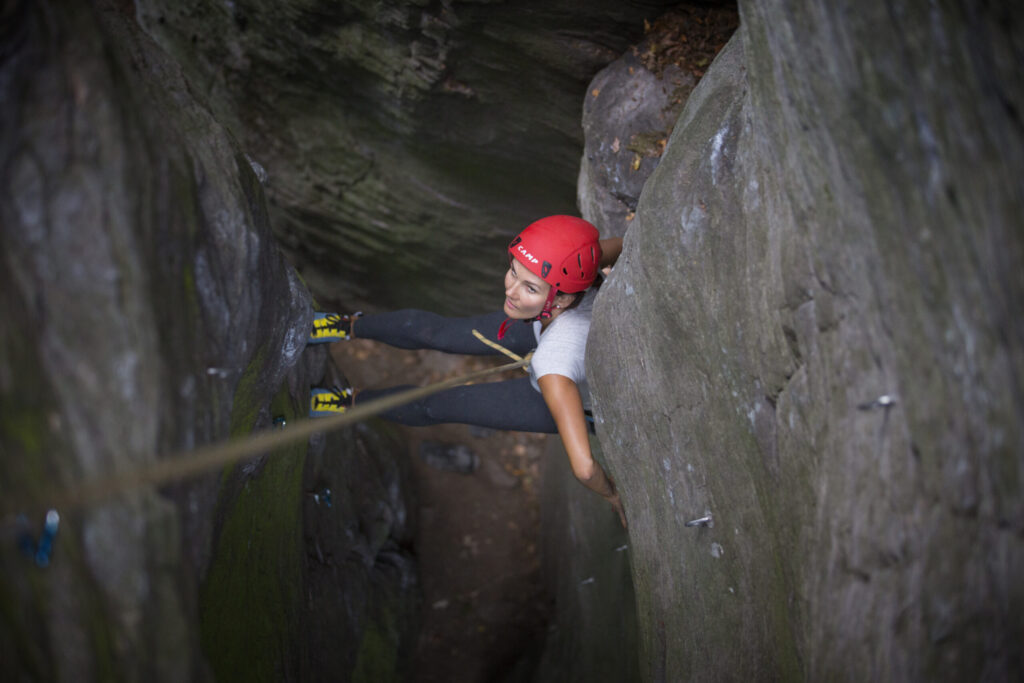
The main aim of the Slovak training was to help girls and women experience climbing in a natural environment and develop greater confidence outdoors. Compared to indoor climbing, rock climbing brought new challenges: different textures, changing routes, more attention to surroundings, and a stronger sense of exposure. At the same time, it also gave participants a much deeper feeling of connection with nature and achievement. Kalamárka was chosen as the main venue because it offers a variety of climbing routes, good accessibility, and rock that is suitable even for less experienced climbers.
Starting with the basics
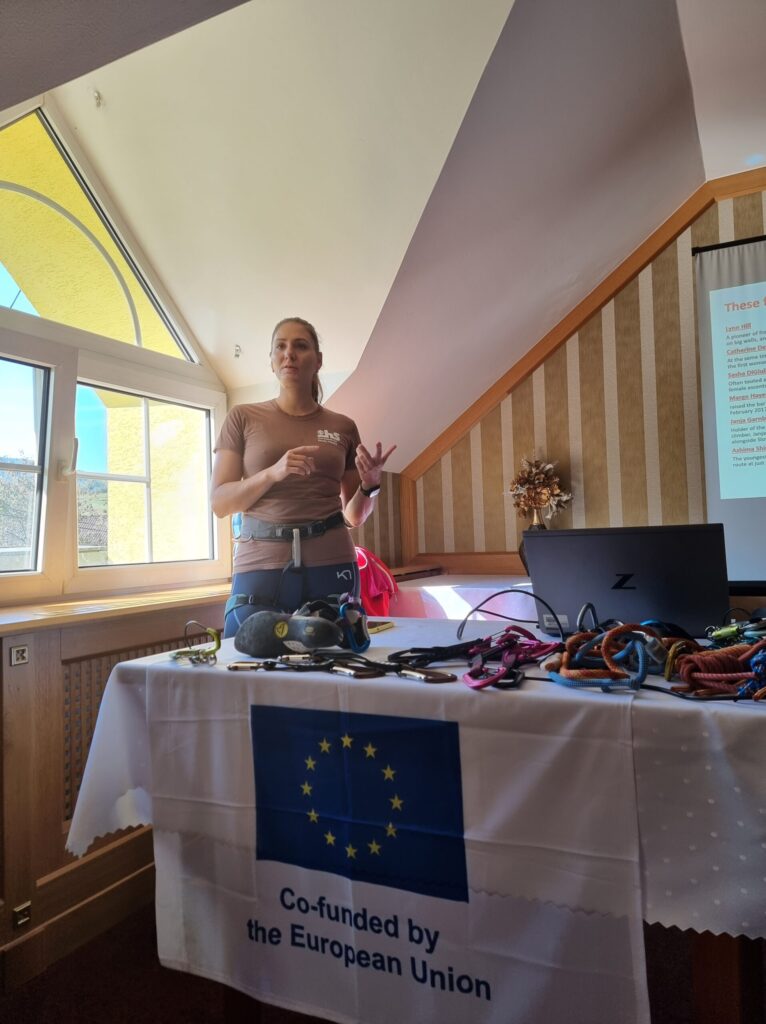
Before heading to the rocks, participants went through climbing terminology, safety instructions, knots, carabiners, and the differences between indoor and outdoor climbing. This gave everyone a common starting point and helped them feel more prepared for the practical part of the weekend.
Once at Kalamárka, the practical training started with a warm-up and continued with climbing sessions on routes of different difficulty levels. Participants formed pairs based on their experience and physical attributes, and instructors supported them throughout the day. The first day focused mainly on getting used to the rock, trying different routes, and building confidence in the outdoor setting.
A weekend full of practice
One of the strongest features of this training was its practical character. Compared to the first CLIMBIT activity, participants spent much more time actually climbing. This was something they appreciated and also one of the reasons why the training was rated so positively in the final evaluation. Many participants highlighted that spending most of the time outdoors and on the rocks made the experience especially valuable.
The second day continued in a similar rhythm. After a short reflection session in the morning, the group returned to Kalamárka and focused on lead climbing and rappelling. For many women, these were completely new techniques, and learning them in a supportive environment helped turn uncertainty into motivation. By the end of the day, participants had not only climbed more, but also expanded their technical knowledge and confidence.
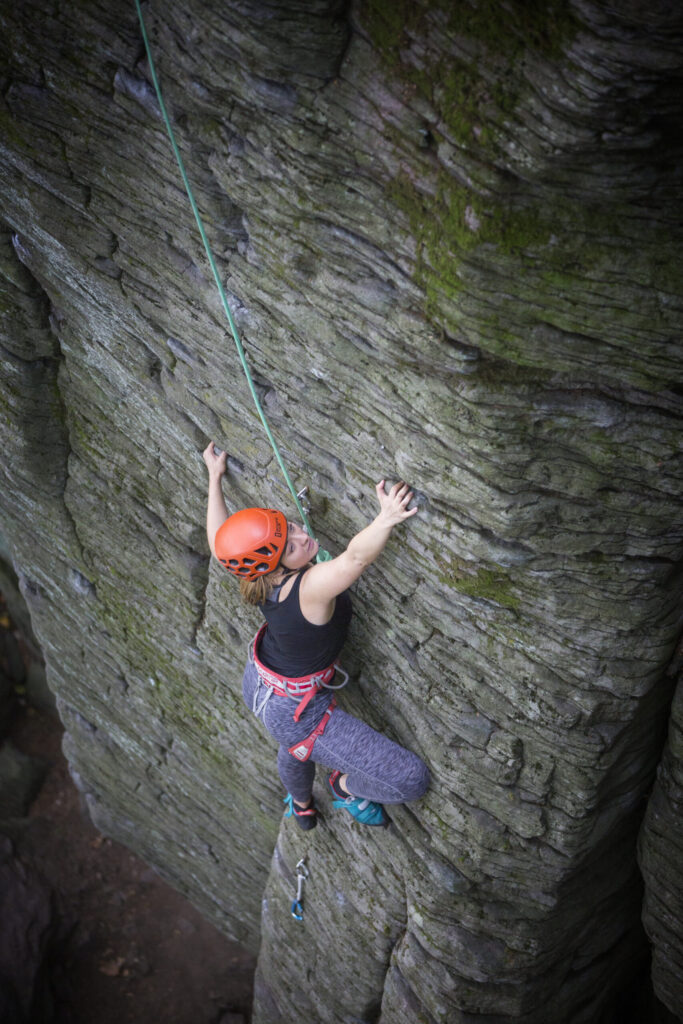
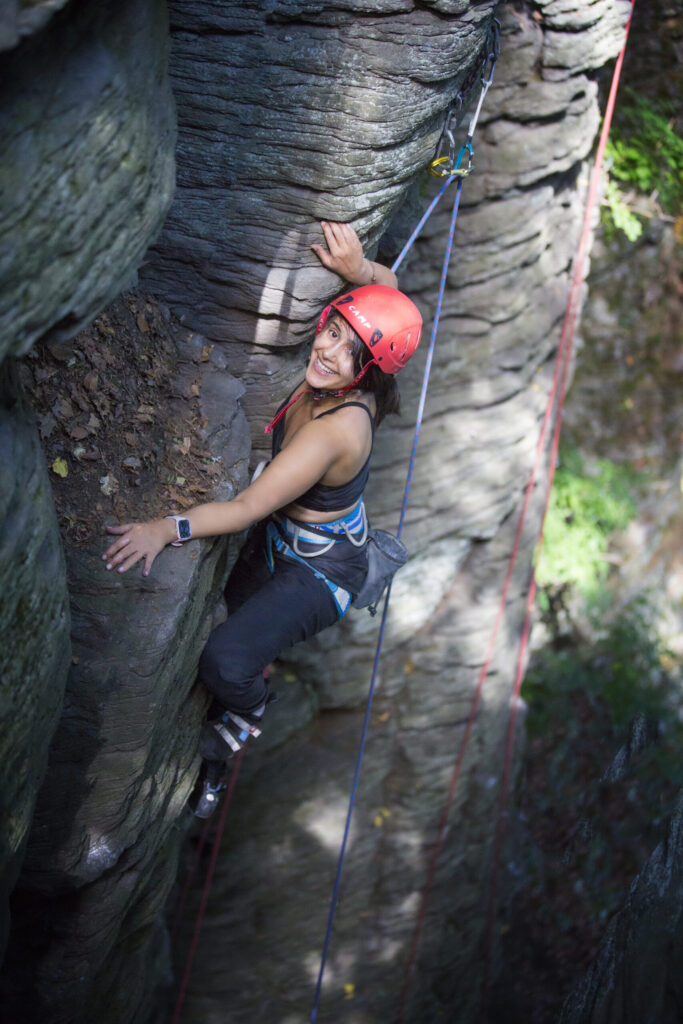
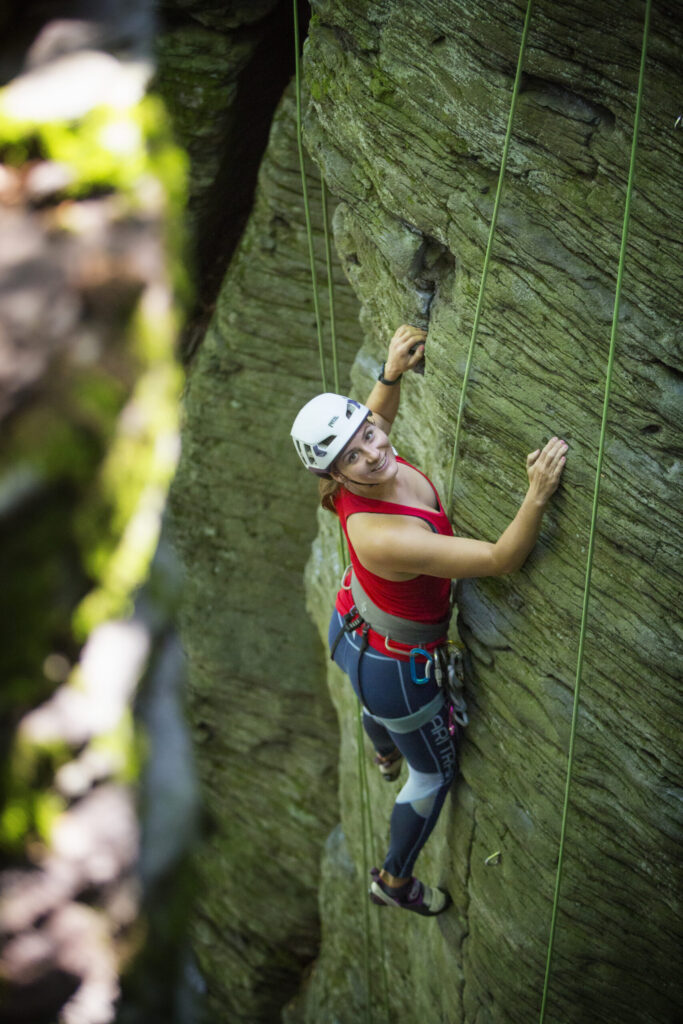
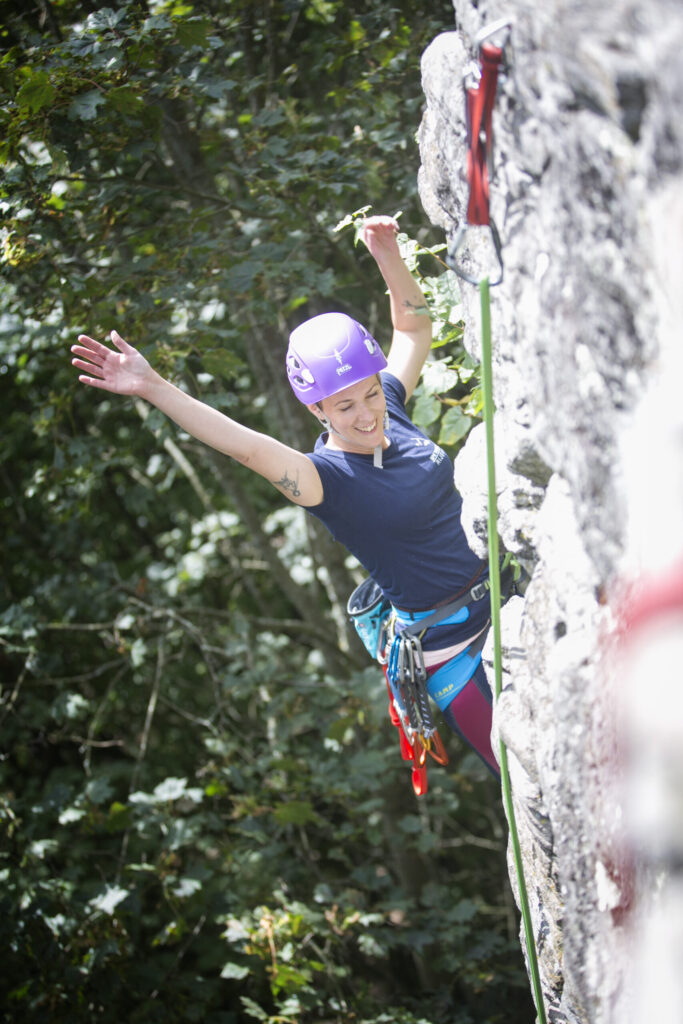
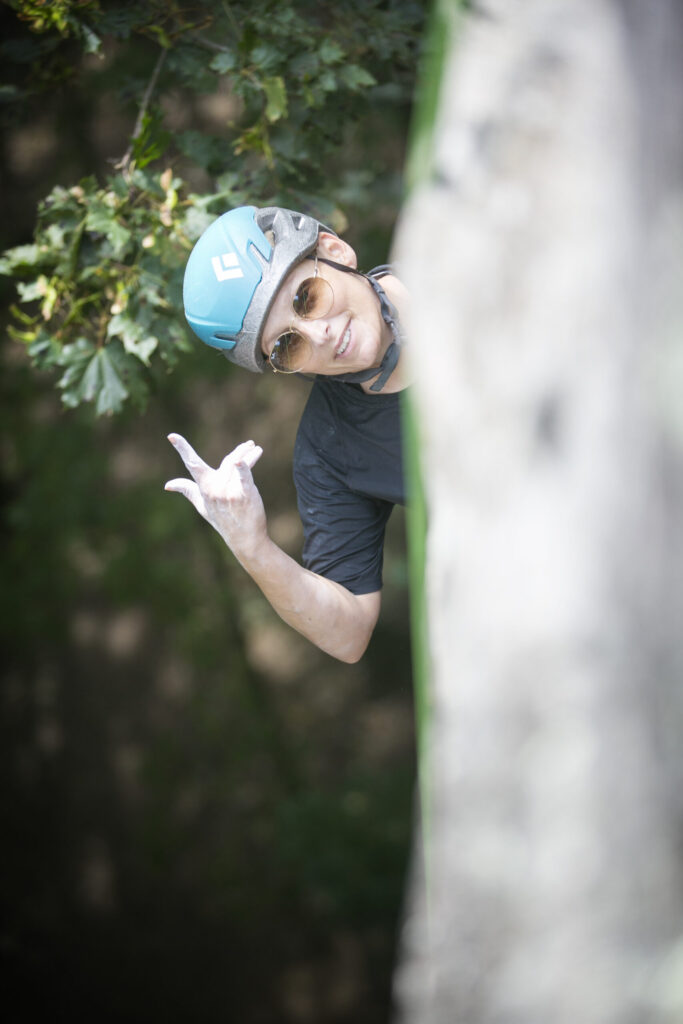
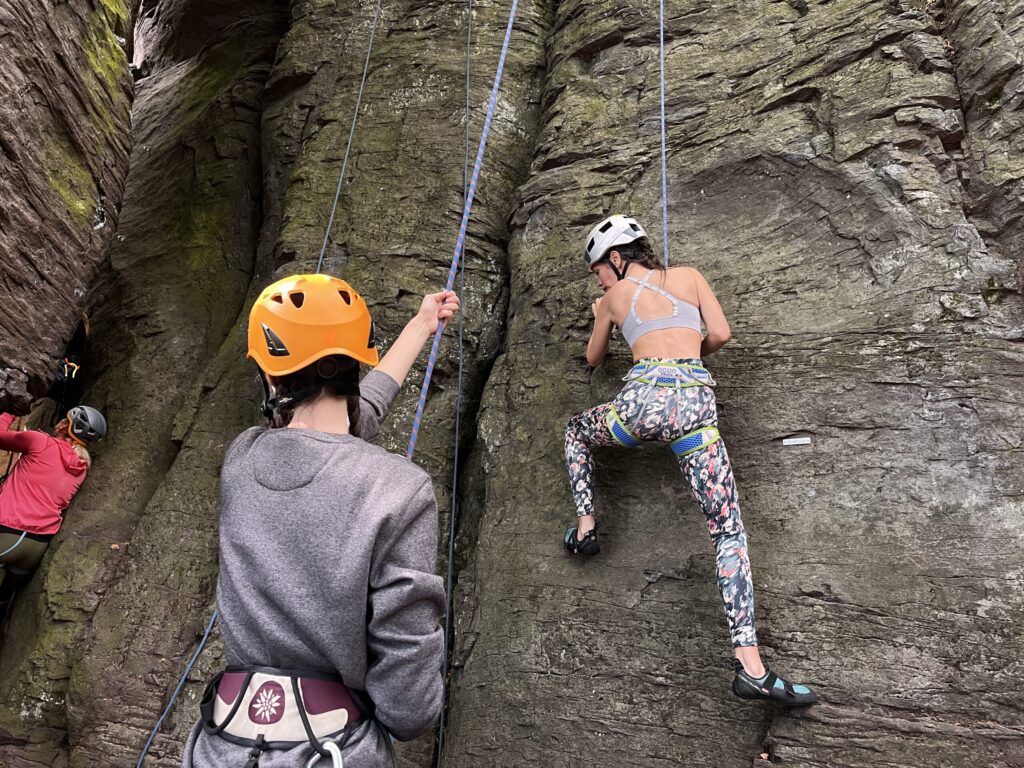
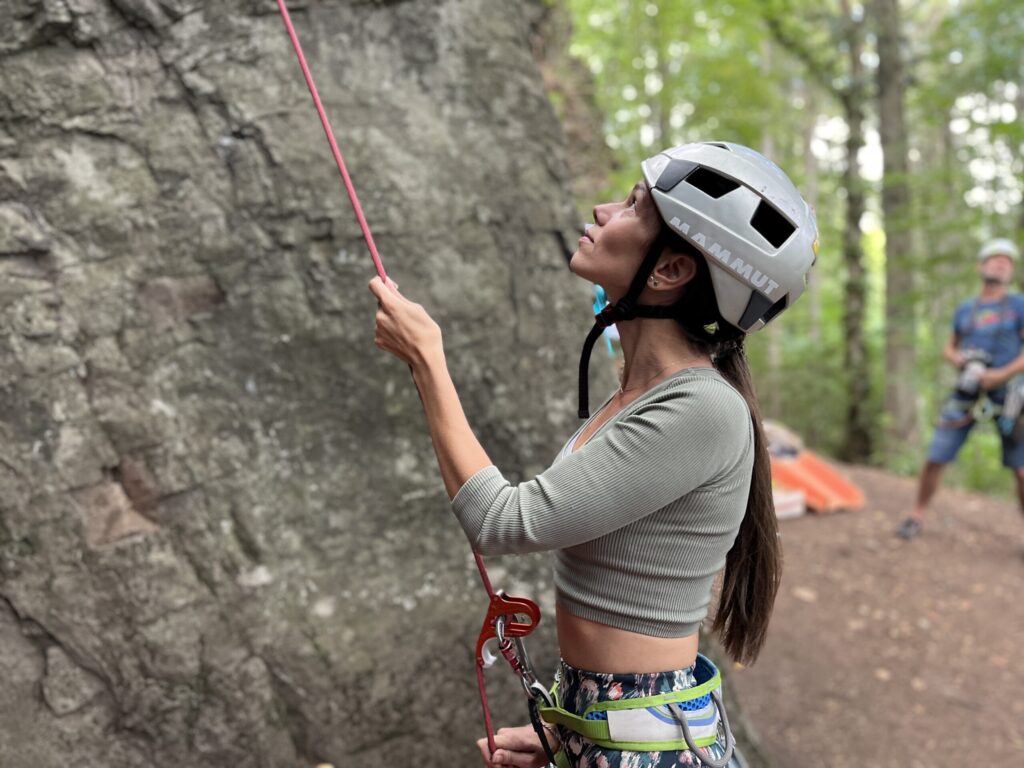
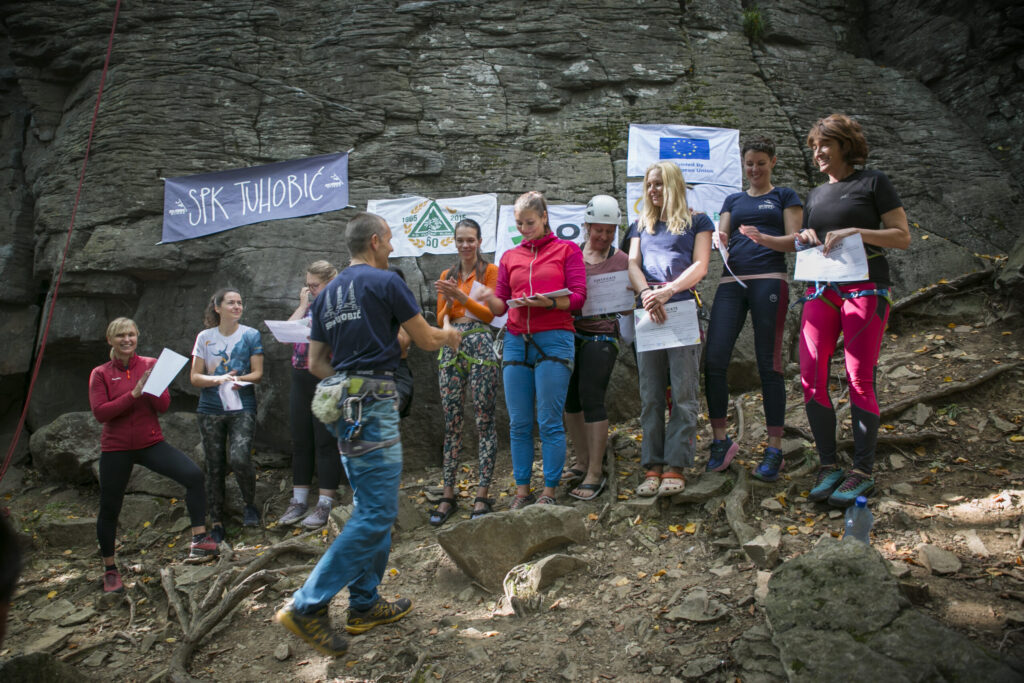
The training was not only about climbing techniques. It also created space for encouragement, peer support, and shared progress. More experienced climbers helped those with less experience, and the international group atmosphere made it easier for participants to overcome fear and try something new. As in the first CLIMBIT training, the weekend also helped strengthen connections between women who share an interest in climbing and outdoor activity.
By the end of the training, participants left with new memories, new contacts, and a stronger motivation to continue climbing in the future. For some, the weekend was a first real step into outdoor climbing. For others, it was a chance to deepen existing skills in a new environment. In both cases, the Slovak training showed that climbing can be a powerful tool for confidence, learning, and connection