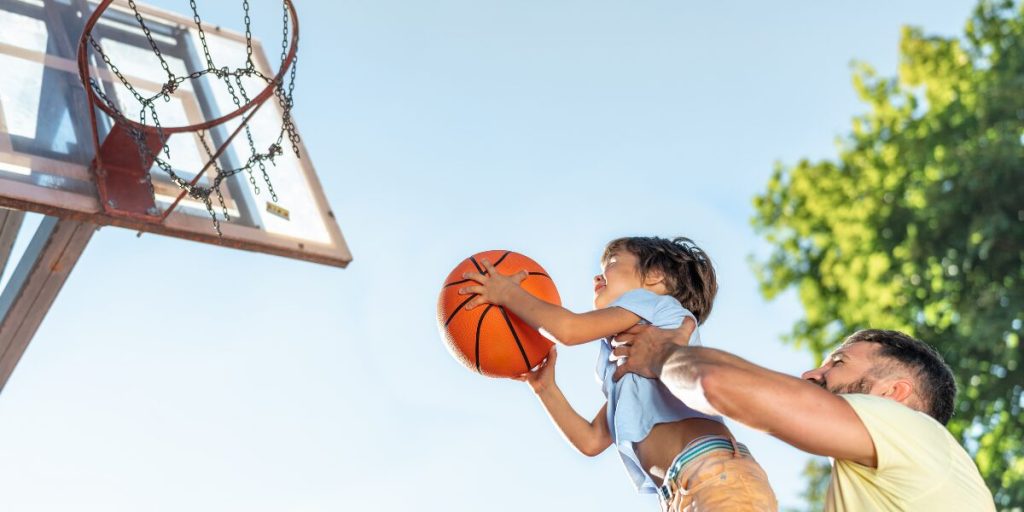
In today’s fast-paced and screen-heavy lifestyles, many families struggle to stay active together, and fathers often lack opportunities for meaningful, shared physical activities with their children. PAPAssport addresses this challenge by using basketball as an accessible, fun, and inclusive tool to bring fathers and children onto the court together.
Through family-friendly basketball activities, trainings, and awareness actions across several European countries, the project encourages healthier habits, strengthens father–child relationships, and supports equal participation of both boys and girls in sport. By making movement a shared experience, PAPAssport helps families reconnect through play, teamwork, and quality time.
Project objectives
The PAPAssport project aims to encourage families—especially fathers and children—to be more physically active together, using basketball as an accessible and enjoyable way to move, play, and connect.
Project Objectives
- 🏀 Encourage regular physical activity among families by promoting simple, enjoyable basketball activities that fathers and children can take part in together
- 🤝 Strengthen father–child bonds by creating shared sport experiences that support teamwork, communication, and quality time
- 🌍 Promote inclusion and gender equality in grassroots sport by ensuring equal opportunities for boys and girls and welcoming families with fewer opportunities
- 🔄 Develop and share practical, reusable basketball activities that can be used by families, clubs, and organisations across different European contexts
Project Results
The PAPAssport project officially kicked off with an inspiring Kick-off Meeting held on 17–18 January 2026, where project partners came together to start shaping the journey ahead. The meeting marked the beginning of close collaboration, allowing partners to connect, share ideas, and build a common vision for the project.
Together, we set the direction for upcoming activities, agreed on how we will work together, and took the first steps toward bringing fathers and children onto the basketball court across Europe. With strong motivation and shared commitment, the project is now moving forward, with guidelines and activities already underway and preparations for local trainings in progress.
What’s next
In the coming phase of the PAPAssport project, partners will carry out research focusing on fathers’ participation in sport together with their children. This work will help better understand everyday motivations, challenges, and barriers families face when trying to be physically active together, and ensure that the project reflects real experiences across different countries.
At the same time, work will continue on the PAPAssport Handbook—a practical and easy-to-use guide bringing together simple, inclusive basketball activities and challenges for families, sport clubs, and community organisations. The handbook will build on activities tested during the project and aim to inspire long-term family participation in sport beyond the project itself.
To support this work, the project team is currently preparing a survey that will gather input from families and participants, helping shape both the research outcomes and the final handbook.
Project Partners
The PAPAssport project is implemented by a diverse European consortium, bringing together Vienna United Basketball and ACTIVE Austria from Austria, Daddyhood Croatia from Croatia, Evnikos Sports Club from Greece, and EduSphera from Serbia. This wide partnership combines expertise in sport, family work, and community engagement, allowing the project to reach families across different cultural and national contexts.




Coordinator’s contact details
- Vienna United Basketball
- Davor Lamesic
- Email: kontakt@viennaunited.eu
Funded by the European Union. Views and opinions expressed are however those of the author(s) only and do not necessarily reflect those of the European Union or the European Education and Culture Executive Agency (EACEA). Neither the European Union nor EACEA can be held responsible for them.