In October 2023, the final international SAFEHIKE training took place in Horná Lehota, Slovakia, bringing together participants from Austria, Slovakia, and Romania for a two-day learning experience focused on general emergency procedures in the mountains. As the closing international training of the SAFEHIKE project, it combined topics from the previous activities with new practical exercises on risk prevention, first aid, and navigation.
The training was part of the Erasmus+ Sport project SAFEHIKE – Stay Safe Keep Hiking, which supports non-formal learning and safety awareness for mountain professionals, active hikers, and amateur outdoor enthusiasts. The Slovak training aimed to help participants better understand how to prevent dangerous situations, react more confidently in emergencies, and move more safely in changing mountain conditions.
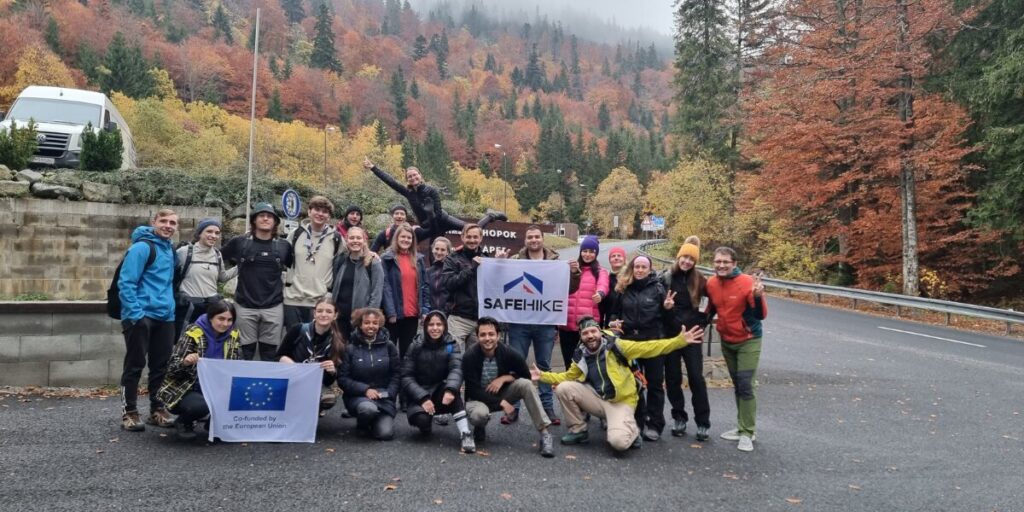
The training took place on 30–31 October 2023 in Horná Lehota, a rural area at the foot of the Low Tatras in Slovakia, with arrival on 29 October and departure on 1 November. The location was chosen for its good access, strong local expertise, and wide range of hiking routes suitable for groups with different experience levels and changing weather conditions.
What was the training about
The main theme of the Slovak training was general emergency procedures in the mountains. Participants explored how to prevent and respond to risks that can arise while hiking, including sudden weather changes, low visibility, injuries, getting lost, and other difficult situations that require calm decision-making and good preparation.
The programme also included first-aid exercises, navigation with maps and compasses, and discussions about how to plan safer hikes in different seasons and conditions. As the final international activity of the project, the training was designed to bring together knowledge from the previous SAFEHIKE trainings and turn it into a more complete learning experience.
Programme highlights
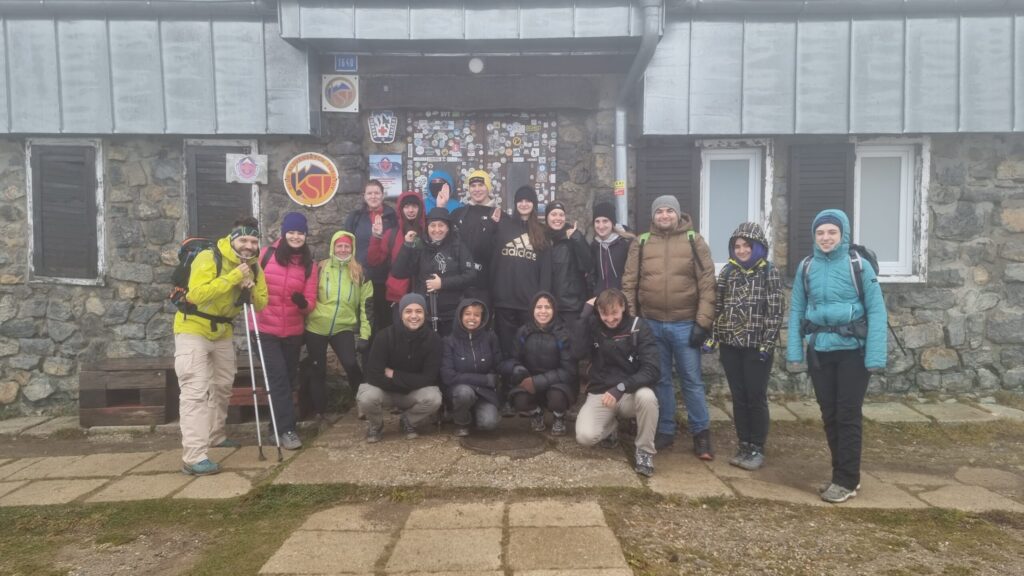
One of the key parts of the training was a hike to Chata M. R. Štefánika (1,740 m). Starting directly from the venue, the group followed a route chosen for its safety and moderate difficulty. The weather during the hike was challenging, with fog, wind, rain, and low visibility, which turned the activity into a very valuable real-life learning experience. After assessing the conditions, the mountain guides decided not to continue towards the higher peak of Ďumbier, putting group safety first. This became one of the most important lessons of the training: in the mountains, reaching the summit is never more important than making safe decisions.
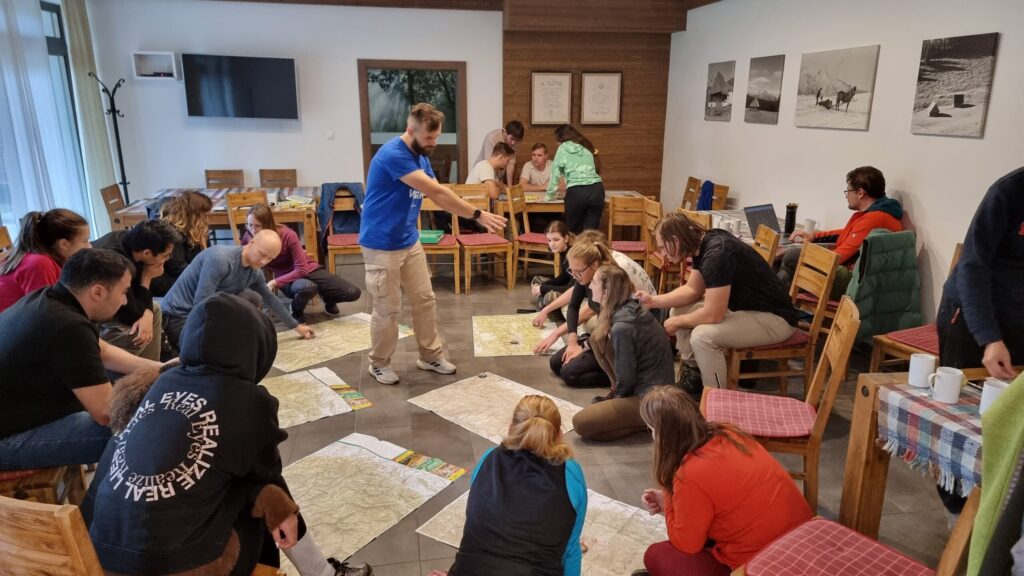
During the hike, participants practiced navigation using paper maps, compasses, and digital tools such as mobile apps, while also gaining direct experience with autumn hiking conditions. The route, weather, and group management all became part of the learning process, showing how preparation, flexibility, and communication matter in outdoor settings.
Later that day, the group joined a session on general emergency procedures and risk prevention. Participants discussed situations hikers may encounter, such as getting lost, hiking in the dark, meeting wild animals, or dealing with injuries, and worked together on possible prevention measures and responses. The session was supported by local mountain guides who shared practical advice based on their experience in the area.
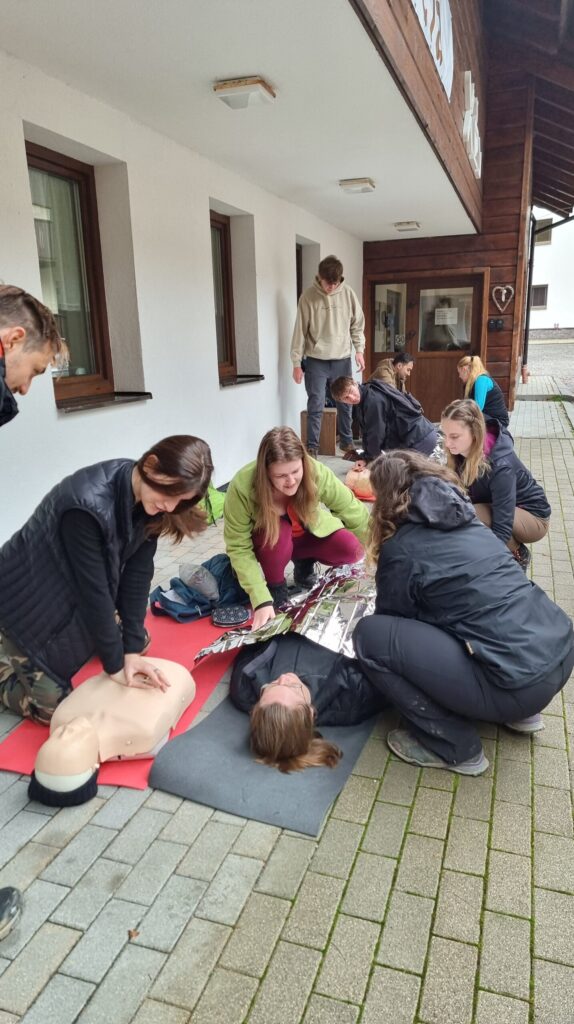
The second training day focused on indoor practical workshops. In the first-aid session, participants worked in small groups to simulate different injuries and react using only the materials they might realistically carry in their hiking backpacks. They also practiced CPR, learned about safe positioning, injury care, and how to transport an injured person more safely until help arrives.
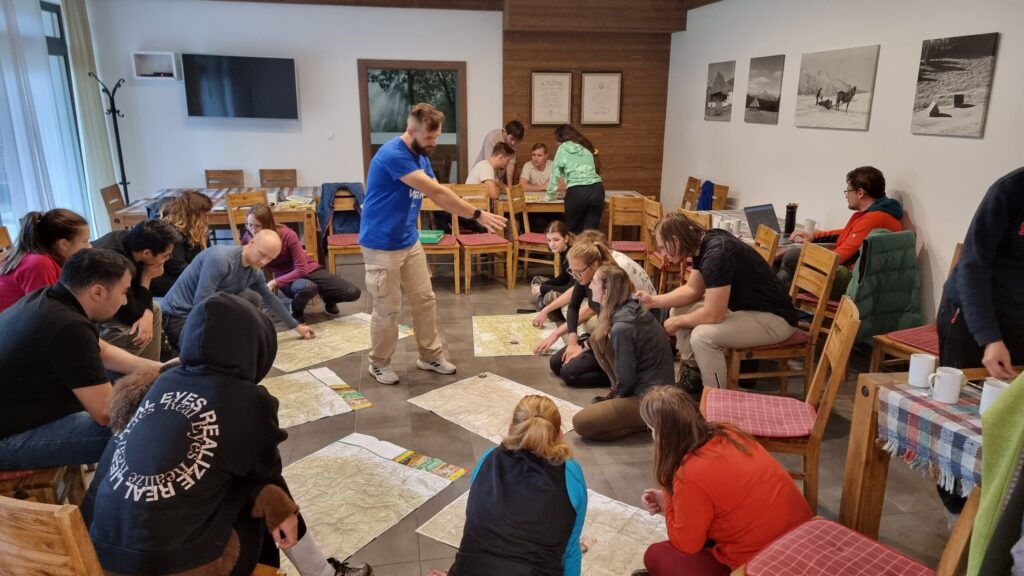
This was followed by a workshop on navigation and orientation, where participants learned how to use maps and compasses more effectively, understand direction and azimuth, and avoid getting lost in nature. In the final practical session, they worked in teams to plan their own hikes, taking into account weather, season, group profile, and safety considerations. The training ended with reflection, evaluation, and certificates of participation.
What participants learned
The Slovak training helped participants strengthen their knowledge of risk prevention, emergency response, first aid, navigation, route planning, and decision-making in mountain environments. The practical experience of hiking in difficult autumn weather was particularly valuable, as it gave many participants a new perspective on how quickly conditions can change and how important it is to adapt plans accordingly.
Participants highlighted several important takeaways: weather can change quickly, low visibility makes navigation much harder, first aid is essential, and having a backup plan is a key part of hiking preparation. They also stressed that safety must always come first, even if that means changing the original plan. Overall, the training gave participants more confidence and a stronger sense of responsibility when hiking in nature.